


How Science and Art Shaped Lili Reinhart’s Hair
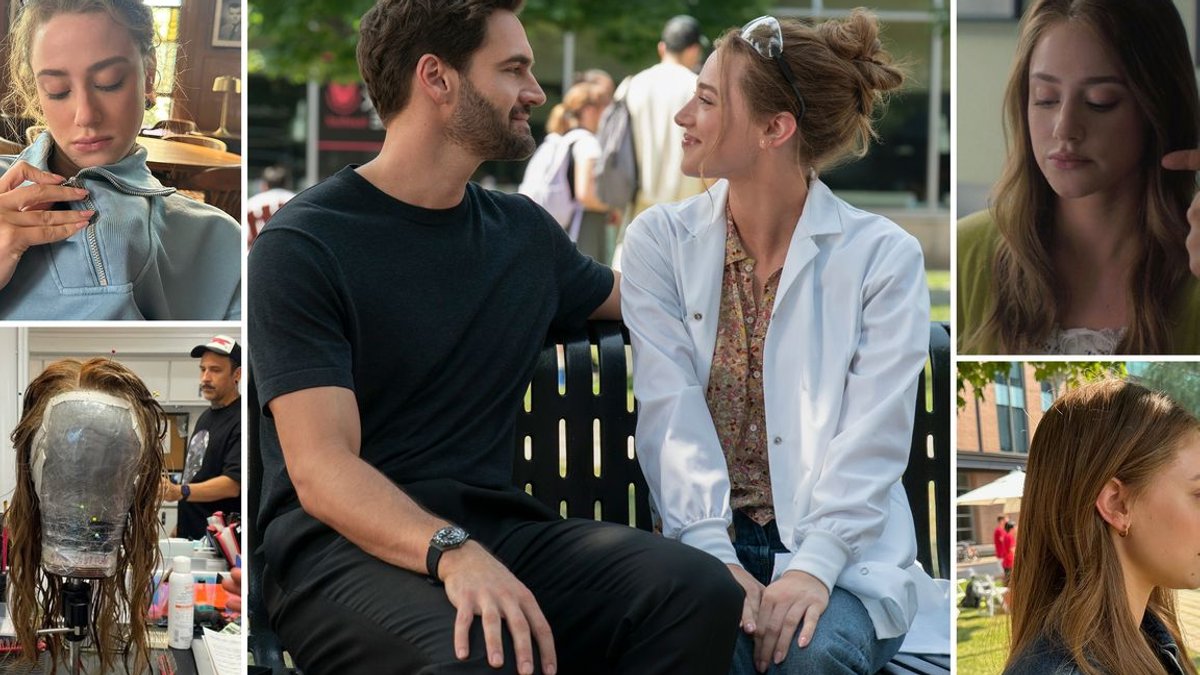
The hair department head for The Love Hypothesis understood the expectations that come with bringing a best-selling romance novel to life. Frédéric Bélanger says that turning Lili Reinhart into Olive goes beyond putting her in a lab coat and closed-toe shoes. The process was an exercise in matching a character’s physical appearance to the vision readers already held in their heads.
The Many Shades of Olive
Everybody wanted to turn Lili into a brunette, Bélanger says, but Reinhart did not dye her hair for the film. What appears onscreen are two wigs created by Bélanger and wigmaker Stacey Butterworth. Landing on the right hair color for the actor and her character took multiple tries. They had to choose a level of brunette that was not so dark that it looked shocking.
The process started with a mood board that kept readers’ expectations for the character in mind. The book cover features a red- or warm brown shade. They tried that exact hue as well as honey and chestnut browns. They ultimately landed on a color that sits between dark blonde and light brown. Butterworth created a mold of Reinhart’s head before installing the hair, strand by strand, into the base.
Once you know someone is wearing a wig, your eyes start looking for it. Bélanger says this posed some real challenges. They had to think about the hairline and the density of the wig. They also had to avoid details that would make it look fake. Sometimes the wigs can look unnatural, and he says that this was a concern from the beginning.
To ensure the wigs looked as realistic as possible on camera, Bélanger and Butterworth added different-colored strands for dimension after seeing them on Reinhart. They also added lighter-weight, fluffy strands throughout the wigs. These strands caught the air easily, so the hair would behave the way natural hair does outside in heat and humidity—and on a girl watching her fake boyfriend play ultimate Frisbee.
Challenges in the Design
Recognizing a wig can be difficult for the audience. The team had to focus on the hairline and density to prevent a fake appearance. They also hid the actor’s thick hair under the wigs. This process involved pulling the hair tight without causing pain. The team used U-shaped pins to secure the wigs and color-matched the parts to the scalp.
Read Also: Kim Kardashian sets Skims Beauty launch for 2027
The actor sometimes complained that the style gave her a facelift. Bélanger adjusted the pulling to be gentler. He also added colored and fluffy strands to create dimension. This helped the hair behave naturally in heat and humidity. He noted that the hair should look like it could be lived in.
Living in the Hair
Hiding Reinhart’s naturally thick hair under the wigs required multiple steps and lots of pulling. Bélanger had to work precisely so that her hair disappeared. The process required him to pull Reinhart’s hair very tight, but he stopped before it would hurt her. He would, however, sometimes tug on the perimeter of her face.
Reinhart would tell him, “Fred, you’re giving me a facelift. People will think I have a facelift.” She was really mindful of him not doing that. Ultimately, he loosened the style. Once the wig was secured in place with U-shaped pins, Bélanger made sure to blend the part with Kryolan Dermacolor Camouflage Creme. He matched the color to Reinhart’s scalp.
From Stiff to Soft
Adam Carlsen’s look also changes as he falls in love. His hair starts stiff. Bélanger describes the beginning of his journey as having hair that is a bit stiffer. This stiffness reflects his character’s coldness. As Adam becomes warmer, his hair relaxes. The style loosens up. Bélanger notes that the hair translates this emotional change. The actor becomes more willing to be warm.
The Cover Scene
The scene illustrated on the cover of Hazelwood’s novel, Olive and Adam’s first kiss, is the catalyst for everything that happens in the story and was shot multiple times from different angles. Bélanger created a chignon with a silhouette similar to the cover art but woven like a bow, understanding it would be important to capture it as close to the source material as possible. After all, “the cover of the book is how you enter a story,” he says.

Kim Kardashian sets Skims Beauty launch for 2027


